


Forest Policy Reform in the Hyrcanian Forests
Forests stretches in an arc along the southern coasts of the Caspian Sea are known as the Hyrcanian forests harbor many Tertiary relic tree Species ....
-----------------------------------------------------------------------------------------
Summary Report of
FOREST POLICY REFORM IN THE HYRCANIAN FORESTS
A CONTRIBUTION OF THE ISLAMIC REPUBLIC OF IRAN
TO THE UNITED NATIONS STRATEGIC PLAN FOR FORESTS 2017-2030 (UNSPF)
Transition from Classical Forestry to Sustainable Forest Management (SFM)
Tehran, December, 2017
Forests Range & Watershed Management Organization
Ministry of Jihad –e-Agriculture
FOREST POLICY REFORM IN THE HYRCANIAN FORESTS
A CONTRIBUTION OF THE ISLAMIC REPUBLIC OF IRAN
TO THE UNITED NATIONS STRATEGIC PLAN FOR FORESTS 2017-2030 (UNSPF)
Transition from Classical Forestry to Sustainable Forest Management (SFM)
December, 2017
Introduction
The Islamic Republic of Iran covers a land area of 1.64 million km2. It is located in the southern part of the temperate zone between 25 and 39 47' north and 44 2' and 63 2' east. Iran is bordered by Turkmenistan, Caspian Sea, Azerbaijan, and Armenia in north, Afghanistan and Pakistan in the east, the Persian Gulf and the Sea of Oman in the south and Iraq and Turkey in the west.
Temperature ranges from -20◦c to greater than 50 ◦c with maximum precipitation reaching approximately 1200 mm in the north, falling to a minimum precipitation of less than 100 mm in the central region of the country. The wrinkles of the Alborz in north, the Zagros in west, and the lowlands between these two mountains ranges encompass steep slopes, plains and playas. Each of these landscapes endure specific climatic and edaphical conditions including precipitation of varying distribution and volume, large temperature fluctuations in different regions, the formation and evolution of soil types with specific physical, chemical and biological characteristics, as well as a diversity of plant communities and ecology. As Iran is located in an arid belt of the world, approximately 85 % of the country has an arid, semi- arid or hyper arid environment. The peculiar features and location cause the country to receive less than a third of world average precipitation, with mean evaporation of more than 3 times higher than global figure. Only the Caspian plain receives more than 1000 mm of rain annually. Two major mountain ranges affect the climate: the Zagros chins in the west and the Alborz in the north. Most humid clouds come from the west, but mountains prevent clouds from reaching central, eastern and southern parts, so the central and southern lowlands and eastern parts of the country receive very little precipitation. Due to low precipitation and unevenly distributed precipitation in these areas, most rivers are seasonal and their flows depend heavily upon the amount of rainfall. If rainfall is above average, flash floods are common. The mean annual rainfall is about 210 mm. Iran’s varying climate has produced a wide range of climatic variations which in turn has created a unique collection of more than 8,000 plant species including 2,000 endemic plant species.
Iran enjoys 8 major climatic regions and in such a climatic diversity, creates differences in northern and southern latitudes, and topographic features including internal plains that allows for five vegetation regions of which the Hyrcanian vegetation region is especially prominent from many aspects.
The Hyrcanian Region
Forests stretches in an arc along the southern coasts of the Caspian Sea are known as the Hyrcanian forests harbor many Tertiary relic tree Species. The Hyrcanian forests contain remnants of the broad-leaved forests that once covered most of the North Temperate Zone about 25 - 50 million years ago, in the early Cenozoic Era. During the Pleistocene epoch when Europe was covered by ice, the Hyrcanian forests remained alive, and at the end of the ice age plant species of the Hyrcanian forests extended westward to Europe. The Hyrcanian forests can therefore be considered as the mother of European forests.
The Hyrcanian forests are the most important refuge area of "arcto-tertiary" forest flora with alive fossil tree species like Parrotiapersica, Pterocaryafraxinifolia, Zelkovacarpinifolia, with many relic endemic herbal species and an endemic tree genus (Parrotia) as follow of the evolution in long-term isolation. The Hyrcanian forest is a hotspot of biological diversity within the West-Eurasian deciduous forest region. The Hyrcanian forests are ecologically connected with the European deciduous forest region by a continental water cycle between the drainage area of Volga River (which covers large parts of the European deciduous forest region), the Caspian Sea and the precipitation at the northern main slope of Alborz Mountains.
The area of these forests, based on the latest FRWO statistics, is about2,000,400 ha of which1,024,506 ha closed forests,660,952ha semi-closed forests with 25-50 percent canopy cover and256,894ha open forests with 5-25 percent canopy cover, together with about58084ha of man-made plantations. Due to socio-economic and ecological importance, the Hyrcanian forests play a vital role in the economy and subsistence of the people in this region as well as in the national accounts. Besides the environmental values of these forests, they have been exploited for income generation, wood production and procurement of raw materials to the wide scope of related industries from the very past.
Forest management
Forest, Range and Watershed Management Organization (FRWO), national state agency, has the responsibility for conservation, rehabilitation, development and sustainable use of forests according to the Forest and Range Nationalization Law (1962) in Iran. The first forest management plan was formulated by a joint Iranian and international expert team in 1959. The silvicultural method used at that time in forest management plans was Shelter Belt System coupled with clear-cutting aimed to achieve even aged and pure stands for wood production to meet the industrial needs, neglecting the criteria and indicators of sustainable forest management. During the past six decades despite of considerable amendments happened in forest management plan and silvicultural method especially after introducing the "Close to Nature Forest Management Approach" two decades ago that emphasizes biodiversity conservation and reduction of wood harvest, little progress was made with regard to sustainability factors in terms of qualitative and quantitative trends in forest resources in the Hyrcanian forests.
Rationale for Forest Policy Reform
Conceptual Framework: Forest Policy Change
Exercise a series of policies, programmes and activities in a fragile and unsustainable natural forest ecosystem aiming to create a balanced and resilient ecosystem in terms of biodiversity, vital ecosystem functions and environmental and socio-economic role against the present and future risks and extreme events.
Legal Framework and Supporting Documents at National level
-Article 50 of National Constitutions of I.R. of Iran;
- Forest and Range Nationalization Law (1962);
- Outlook Programme: Environment and Natural Resources Chapter (2005 - 2025);
- Comprehensive Forest Conservation Plan (2003);
- Forest monitoring, conservation, exploitation and management programme (2013);
- Supreme Leader's Decree on National Environmental Policy (2015);
- Article 38 of the Sixth Five- Year Development Plan of I.R. of Iran (2015);
International Conventions and Commitments
-Law of adjoining the government of I.R of Iran to UNFCCC, UNCBD and UNCCD Conventions in line with the Government commitment for conservation of forests as carbon sinks and reduction of green house gases, rehabilitation of biodiversity of threatened and red list species and prevention of land use change in forest areas;
-The United Nations Strategic Plan for Forests 2017-2030 (UNSPF) especially Global Forest Goal 1: Reverse the loss of forest cover worldwide through SFM, including protection, restoration, afforestation and reforestation, and increase efforts to prevent forest degradation and contribute to the global effort of addressing climate change:
-Sustainable Development Goals (2016-2030);
- Paris Action Plan for climate change (2015);
-Land Degradation Neutrality (LDN) Target Setting Programme of the UN Convention to Combat Desertification (UNCCD);
-Nomination of the Hyrcanian ancient forests to UNESCO as a World Natural Heritage site for present and future generation.
Why Forest Policy Reform
-Heavy forest degradation and decline in qualitative and quantitative sustainability indicators in the Hyrcanian forests especially natural regeneration and biodiversity loss based on the latest survey;
-Lack of comprehensiveness and conformity of forest management plans in terms of concepts and approach with actual ecological facts in the Hyrcanian forests;
-Sectoral planning system and lack of integration and linkages within social- ecological system affecting the forests ecosystem;
- Lack of trust and social support of local communities, stakeholders and academia toward forest management principles in the Hyrcanian forests;
-Lack of an integrated conservation plan and increased illegal logging from forests;
-Exacerbation of environmental disasters and increased occurrence of floods, etc;
-Climate Change and decline of Buxus hyrcana in the Caspian forests and repeated occurrence of forest fires, and pests & diseases;
- Rapid population growth and urbanization;
- Forest land use change to agricultural activities and settlements;
Unsustainable mining and scattered livestock grazing in forests;
Vision
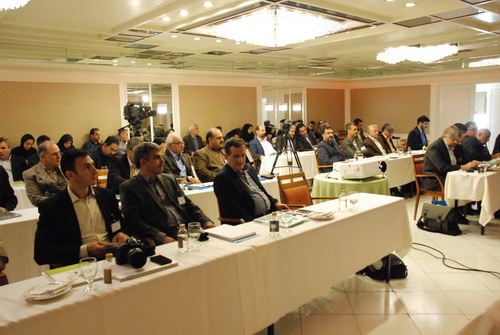
Hyrcanian Forests, a world green corridor full of sustainability, peace and welfare for the benefits of present and future generations,
Objectives
1-Reverse degradation trend of the Hyrcanian forests through conservation, rehabilitation, reforestation and forest plantation;
2-Increase sustainability of forests in terms of vitality, resiliency, production and biodiversity;
3-Increase the socio-economic benefits from forests and diversify livelihoods of forest dwellers through creating alternative livelihoods and capacity building;
4-Increase the area of protected forests, reserves and forest parks;
5-Introduce appropriate forest governance, structure and institution in the Hyrcanian forests and promote cross sectoral cooperation through stakeholders and particularly local community's involvement
6-Institutionalize forest sector in national and provincial socio-economic plan and land-use planning scheme in the Hyrcanian forests.
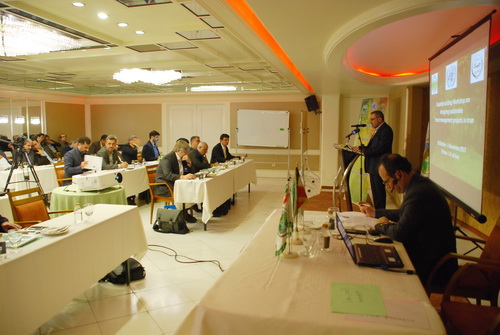
Strategies
1- Formulation and implementation of forest conservation plan for flora and fauna enrichment based o Aichi Targets and NBSAP;
2- Classification of the Hyrcanian flora and fauna based on IUCN system and conservation of endangered species;
3- Formulation and implementation of forest adaptation action plan against climatic changes and enhance forest resilience as a carbon sink against forest pests and diseases and forest fires.
4- Revision of Forest Policy based on Close-to-Nature Silviculture aimed at climax of structure and mixture of forest stands;
5- Development of community-based forestry plans that support rural development notion and strengthening socio-economic functions of forests;
6- Development of timber cropping with fast–growing species aimed at increasing the efficiency and productivity of small and medium sized businesses and entrepreneurs;
7- Valuation of ecosystem services/functions such as water production and disaster reduction and incorporating them in the feasibility study of development plans and environmental assessments;
8- Imposing ban on licensing new mines and conducting and supervising active mines in forest sites;
9- Formulation and implementation of sustainable ecotourism plan and prevention of unsustainable tourism;
10- Facilitation of wood and lumber import under strict quarantine measures to control forest pests and diseases;
11- Resource mobilization and application of new technologies in implementing sustainable management;
12- Advocacy, outreach and Forest Communication.
First Three-Year Executive Plans (2017-2019)
1-Termination of 110 classical log-based forestry contracts with private, cooperatives and government enterprises, with an area of 950,000 ha (2017-2019);
2-Transfer of all staff recruited by the old contractors to the new contractors in charge of Conservation and Technical Plan implementation;
3- Development of guidelines and contract format for contracting eligible companies;
4-Selection of new eligible companies in a transparent and comparative manner and supervision and evaluation of the performance of those eligible companies in charge of sustainable forestry plans;
5- Monitoring and field survey to track the qualitative and quantitative changes in forest zones;
6- Strengthening forest guards, NGOs networks and CSOs in the Hyrcanian region;
7-Formulation of conceptual and technical frameworks of sustainable forestry plans in collaboration with science and research centers, academia and CSOs;
Post 2019 Executive Plans (2019 onwards)
1. Formulation of an integrated forest management plan based on watershed borders including land use planning and ecological capacity assessment for 103 Caspian basins with emphasize on community forestry;
2. Establishment of Monitoring and Evaluation System and data bank to track activities, achievements and Criteria & Indicators of sustainable management;
3. Designing forest-smart climate and adaptation plan, risk and vulnerability assessment and means and ways to increase resilience;
4. Establishment of early warning system for forest pests &diseases and forest fires;
5. Formulation of terms of reference and guidelines of sustainable forestry plans based for project formulation in the post logging ban period of all basins and the Caspian forests;
6. Mobilization of innovative financial resources parallel to governmental resources;
7. Capacity building and training of FRWO staff, key stakeholders and local communities on sustainable/SFM forestry planning concepts and implications;
8. Sharing experiences and lessons learned of SFM with facilitation of UNFF.

نظر شما :