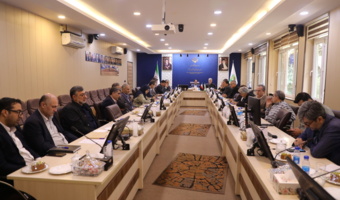
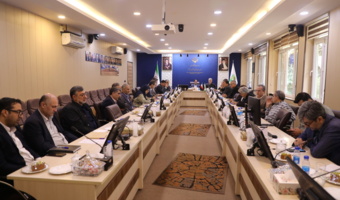
The Intergovernmental Panel on Climate Change (IPCC), the UN body for assessing the science related to climate change, presents its findings at a regional outreach event in Tehran on 18 June 2018.
It also presents its work programme for the Sixth Assessment Report (AR6) cycle at the event, which is hosted by the Islamic Republic of Iran Meteorological Organization.
IPCC Bureau members and authors participate in workshops attended by policymakers, practitioners, city administration officials, scientists, representatives from civil society and business, the general public and media representatives from Iran, as well as participants from Azerbaijan and Iraq.
The event is taking place shortly after the selection of authors by the IPCC for its next comprehensive assessment – the AR6 -- and before the launch of the Special Report on Global Warming of 1.5 °C (SR15) due in October 2018. Currently two other Special Reports – on Climate Change and Land (SRCCL) and on the Ocean and Cryosphere in a Changing Climate (SROCC) are open for review comments
"During this cycle we aim to cover the regional aspects in a more comprehensive manner and I hope that this event will motivate the research community to publish literature that can feed into AR6," said Youba Sokona, Vice-Chair of the IPCC.
Scientists will present the latest IPCC report, the Fifth Assessment Report (AR5), completed in 2014, which was a crucial input to the Paris Climate Change Agreement reached in December 2015. AR5 found the world has the means to limit global warming and build a more prosperous and sustainable future, but pathways to limit warming to 2ºC relative to pre-industrial levels would require substantial emissions reductions over the next few decades.
"Iran faces multiple challenges related to climate change, including droughts, heat waves, water shortage and impacts on food production," said Edvin Aldrian, Vice-Chair of Working Group I of the IPCC. "However, adaptation and mitigation strategies exist for reducing these risks and creating opportunities for a sustainable future," he added.
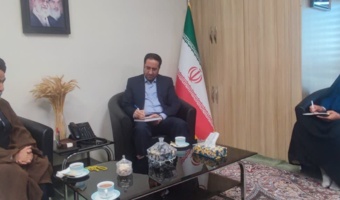
As part of the outreach event there are several workshops tailored to the various audiences. Some of them will be streamed live. A media workshop followed by a press conference takes place from 8.00 a.m. to 9.45 a.m. local time on 18 June at IRIMO headquarters in Tehran. These will be followed by an opening session with the participation of H.E. Isa Kalantari, Vice-President of Iran and Head of Department of Environment; H.E. Abbas Akhoundi, Minister of Roads and Urban Development; Mr Davood Parhizkar, National IPCC Focal Point and President of IRIMO, and Mr Youba Sokona, Vice-Chair of the IPCC.
"Weather and climate conditions are not only threatening Central Iran with drought and desertification, but also putting the whole civilization of Iran and western Asia at risk," said Mr Akhoundi.
Vice-President Kalantari added: "In spite of the complicated and difficult environmental situation of Iran - including reductions in precipitation, increases in temperature, and some lagoons drying out - the government is spending significant amounts on maintaining and upgrading the environmental situation of the country."
Mr Parhizkar added: "Sustainable development can only be defined in the framework of climate capacity. In other words, extra development neglecting the climate capacity of an area will surely lead to instability and also waste resources, and cause many problems. So development programmes should be reviewed in the light of the changes that are occurring in the climate."
The Intergovernmental Panel on Climate Change (IPCC), the UN body for assessing the science related to climate change, presents its findings at a regional outreach event in Tehran on 18 June 2018.
It also presents its work programme for the Sixth Assessment Report (AR6) cycle at the event, which is hosted by the Islamic Republic of Iran Meteorological Organization.
IPCC Bureau members and authors participate in workshops attended by policymakers, practitioners, city administration officials, scientists, representatives from civil society and business, the general public and media representatives from Iran, as well as participants from Azerbaijan and Iraq.
The event is taking place shortly after the selection of authors by the IPCC for its next comprehensive assessment – the AR6 -- and before the launch of the Special Report on Global Warming of 1.5 °C (SR15) due in October 2018. Currently two other Special Reports – on Climate Change and Land (SRCCL) and on the Ocean and Cryosphere in a Changing Climate (SROCC) are open for review comments
"During this cycle we aim to cover the regional aspects in a more comprehensive manner and I hope that this event will motivate the research community to publish literature that can feed into AR6," said Youba Sokona, Vice-Chair of the IPCC.
Scientists will present the latest IPCC report, the Fifth Assessment Report (AR5), completed in 2014, which was a crucial input to the Paris Climate Change Agreement reached in December 2015. AR5 found the world has the means to limit global warming and build a more prosperous and sustainable future, but pathways to limit warming to 2ºC relative to pre-industrial levels would require substantial emissions reductions over the next few decades.
"Iran faces multiple challenges related to climate change, including droughts, heat waves, water shortage and impacts on food production," said Edvin Aldrian, Vice-Chair of Working Group I of the IPCC. "However, adaptation and mitigation strategies exist for reducing these risks and creating opportunities for a sustainable future," he added.
As part of the outreach event there are several workshops tailored to the various audiences. Some of them will be streamed live. A media workshop followed by a press conference takes place from 8.00 a.m. to 9.45 a.m. local time on 18 June at IRIMO headquarters in Tehran. These will be followed by an opening session with the participation of H.E. Isa Kalantari, Vice-President of Iran and Head of Department of Environment; H.E. Abbas Akhoundi, Minister of Roads and Urban Development; Mr Davood Parhizkar, National IPCC Focal Point and President of IRIMO, and Mr Youba Sokona, Vice-Chair of the IPCC.
"Weather and climate conditions are not only threatening Central Iran with drought and desertification, but also putting the whole civilization of Iran and western Asia at risk," said Mr Akhoundi.
Vice-President Kalantari added: "In spite of the complicated and difficult environmental situation of Iran - including reductions in precipitation, increases in temperature, and some lagoons drying out - the government is spending significant amounts on maintaining and upgrading the environmental situation of the country."
Mr Parhizkar added: "Sustainable development can only be defined in the framework of climate capacity. In other words, extra development neglecting the climate capacity of an area will surely lead to instability and also waste resources, and cause many problems. So development programmes should be reviewed in the light of the changes that are occurring in the climate."
|  |



نظر شما :