


FRWO Implemented CSP in 19 Provinces
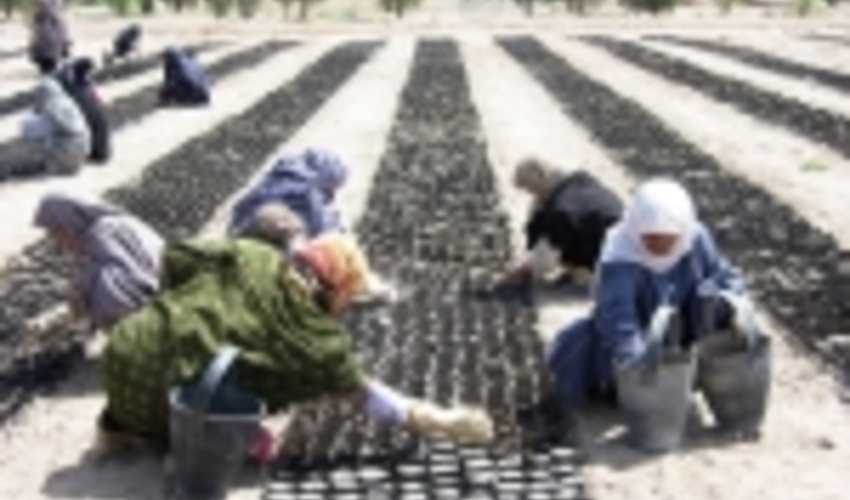
The Carbon Sequestration Project (CSP) started in the South Khorasan Province with support from the Global Environment Facility (GEF) in 2003 with three main goals including provide a model to demonstrate that carbon sequestration in arid lands can be carried out in an economical way and so contribute to the potential of such lands to act as carbon sinks, restore degraded natural resources and improve socio-economic status of local communities and enhance ecosystem services..
The project aims to sequester atmospheric carbon in the biomass to reduce the effects of global warming as the main source of climate change, through local communities and micro (social) enterprises. Based on reports, some 60 percent of global warming is due to carbon emission into atmosphere. Therefore, in case of control of carbon emission about 70 percent of global warming can be mitigated.
The strategy of CSP is to promote the restoration, conservation and sustainable use of Iran’s limited land and water resources through holistic and integrated approaches based on participation of local communities.
According to Dr. Khosro Shahbazi, deputy head of FRWO for Watershed Management, Rangeland & Desert Affairs: in the second phase 2010-2016, the project was up-scaled and replicated in new provinces in Iran. Given its success and willingness of FRWO, In June 2017, a new addendum to the original project document and Government Cost-sharing Agreement (Phase III) was signed between FRWO and UNDP aiming to achieve participatory natural resources management and sustainable rural development in 4 new provinces including South Khorasan, North Khorasan, Golestan and Yazd provinces, in line with the previous phases. While UNDP is only involved in the implementation of the third phase of this project in four provinces, FRWO as the national implementing partner representing the Government of I.R. of Iran is implementing the model of this project in 19 other provinces
He said that over the years, the project has demonstrated both the carbon sequestration potential of significant quantities of marginal land and the potential of local communities to engage in sustainable rural development. The project has empowered local communities, generated sustainable enterprises, built local institutions, thus ensuring ownership by local communities. These communities have, in turn, assumed responsibility for the restoration, conservation and sustainable use of Iran’s limited land and water resources.
Khosro Shahbazi added that this year some 4500 billion RLs have been allocated to FRWO for plantation of 354,000 hectares of decertified lands through afforestation and runoff control projects.
He also said that with the approval of 6,600 billion RLs by the Parliament from the annual budget for sand dune fixation operation, 12,500 hectares of hotspots of desertification will be stabilized in nine provinces.
In this connection, Farhad Sardari, Director General of Desert Affairs Bureau of FRWO, also told IRNA on Tuesday that about 29,852 hectares have been afforested from the national and provincial budgets so far in carbon sequestration project sites.
He added that the carbon sequestration model also called the integrated management model for natural resources and rural development was introduced in the recent years due to paradigm shift that occurred in the rehabilitation of desert areas.
 Iran engaged 8,600 women by implementing Carbon Sequestration Project (CSP) – Phase III- UNDP in Iran

نظر شما :